
Greek Easter is the most important religious and cultural celebration in Greece. In 2025, Greek Easter is celebrated on the 20th April. Here are some of the unique Greek Orthodox Easter traditions and customs.
Most Christians observe Easter according to the Gregorian calendar, which was introduced in 1582. However, the Eastern Orthodox Church continues to follow the Julian calendar, in use since 45 BC, to determine Easter dates.
As a result, Greek Easter—also known as Orthodox Easter—often falls on a different date than Easter in the Western world. Occasionally, both celebrations align, as they did in 2017, but in other years, they can be weeks apart. In 2021, for example, Orthodox Easter was four weeks later, though the difference can be as much as five weeks in some cases.
When is Easter 2025 in Greece?
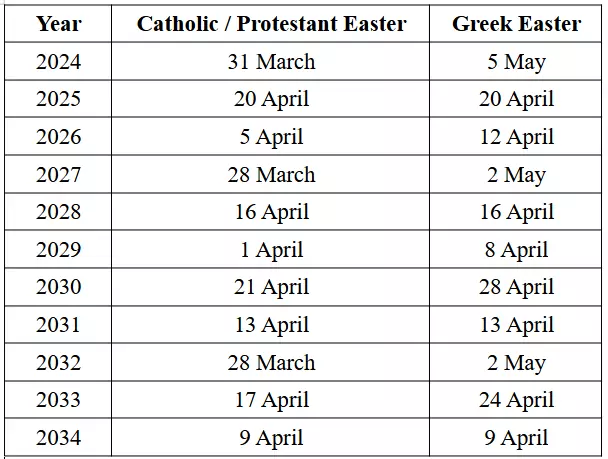
Greek Orthodox Easter 2025 falls on 20 April, coinciding with both Catholic and Protestant Easter that year.
For those who like to plan ahead, the table below provides Easter dates for the current decade. In some years, Orthodox and Western Easter align, as they do in 2025, when all will be celebrated on 20 April.
Holy Friday and Easter Monday are public holidays in many places, affecting services and business operations.
Archaeological sites and museums typically operate with reduced hours on Holy Friday and Saturday and close on Easter Sunday. However, schedules may vary each year, so visitors are advised to check the official website of any attraction they plan to visit.
Retail stores generally open from 1:00 p.m. to 7:00 p.m. on Good Friday and from 9:00 a.m. to 6:00 p.m. on Holy Saturday, while remaining closed on Easter Sunday.
Although often referred to as Greek Easter, Orthodox Easter is observed in several other countries, including Romania, Bulgaria, Ukraine, Serbia, Moldova, North Macedonia, Cyprus, Montenegro, Georgia, Belarus, and Russia.
Is Greek Easter the same as Orthodox Easter?
People use the terms Greek Easter, Orthodox Easter and Greek Orthodox Easter interchangeably. In Greek, this religious day is known as Agio Pascha, which means Holy Easter.
Why is Easter a different date in Greece?
Orthodox churches around Europe follow the Julian calendar, which was launched in 45 BC. The Protestant and Catholic churches follow the Gregorian calendar, which replaced the Julian calendar in 1582.
Greece Easter Traditions
There are many Easter traditions in Greece. Some of them are related to church services. There are several liturgies throughout Lent, the seven-week period before Easter, and during the Holy Week. As an example, the Unction takes place on Holy Wednesday.
Other Easter traditions have to do with food. During Lent, many foods are not allowed. On Holy Saturday and Easter Day, Greeks prepare a few special dishes.
These traditions are a huge part of the Greek culture. Many Greeks follow them – even people who are non-religious.
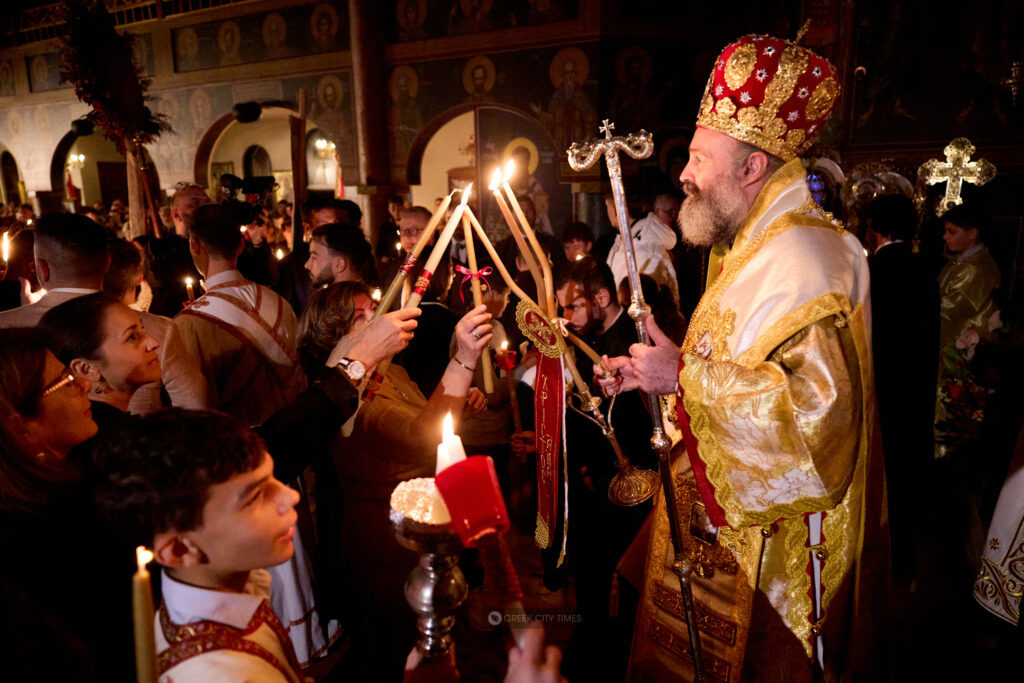
What is the Holy Light / Holy Fire?
On the eve of Orthodox Easter, a miraculous light is said to glow from what is widely believed to be the Tomb of Christ. This is called the Holy Light in Greek and is also known as Holy Fire. This light comes all the way from Jerusalem to Greece and is used to light up the Easter candles after midnight, which is symbolic of Christ’s resurrection.
Fasting during Lent
The seven-week period before Easter is called Lent, known in Greek as Sarakosti. During that time, some Orthodox Christians go on a special fast, which we call nistia, in order to cleanse themselves in preparation for Easter.
Many people only fast on the Holy Week. This is the last week of Lent, between Palm Sunday and Holy Saturday. In Greek, we call it Megali Evdomada, which literally translates to Grand Week.
Greek fasting is similar to a vegan diet, with the addition of seafood, and sometimes excluding olive oil and wine. During Lent, many restaurants serve special dishes, which we call nistisima.
Lent begins on Clean Monday, also known as Ash Monday. Greeks celebrate this public holiday with feasts of Lent foods and flying kites. Certain days, like the Greek Independence / Annunciation Day, call for the consumption of fish.
In fact, according to the Greek Orthodox religion, people are supposed to give up all pleasures of the flesh during Lent.
What is the significance of Easter in Greece?
Easter is the most important religious celebration in Greece. It commemorates Jesus Christ’s agony, death and resurrection. As it’s always in spring, it is also a symbol of rebirth and renewal.
What do Greeks eat on Greek Easter?
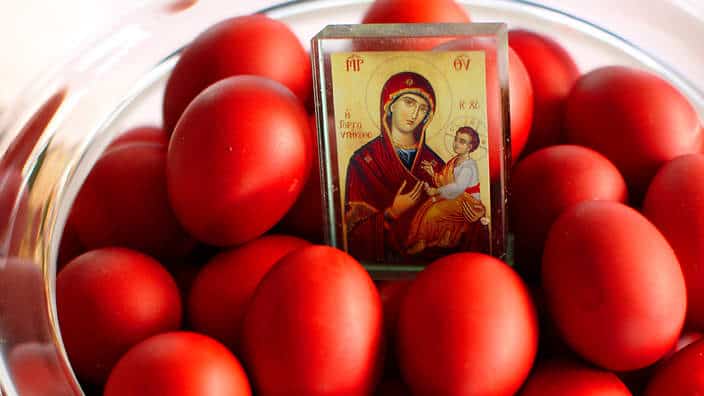
Greeks prepare special dishes for Easter Day. Among others, you will find grilled lamb or goat on the spit and hard-boiled eggs that have been dyed red. There are other meat-based recipes, such as kokoretsi and goat intestines wrapped around offal.
Why do Greek Orthodox crack eggs at Easter?
On Easter Sunday, Greeks play a traditional game of cracking red-dyed eggs. The colour red symbolises the blood of Jesus Christ, and the cracking of the shell symbolises his breakthrough resurrection from the dead.
Read also Psychology Secrets: The Mind Tricks Controlling Your Everyday Behaviour
